
Plan custom raised vegetable boxes with the right sun, size, soil, drip irrigation, and access for Walnut Creek, Concord, and Clayton backyards.
Raised vegetable boxes make a home garden easier to plant, water, and harvest. Built as part of a landscape installation, they can also look like a finished feature of the yard instead of a weekend project. For Walnut Creek, Concord, and Clayton backyards, the details that matter most are sun, size, soil, and water.
Find the Sunniest Practical Spot
Most vegetables need plenty of direct sun, so watch the yard through the day before choosing a location. Note shade from trees, fences, and the house, and remember that summer and winter sun angles differ.
Balance sun with convenience. A box close to the kitchen door gets checked and harvested more often than one at the back of the lot.
Size the Boxes for Reach
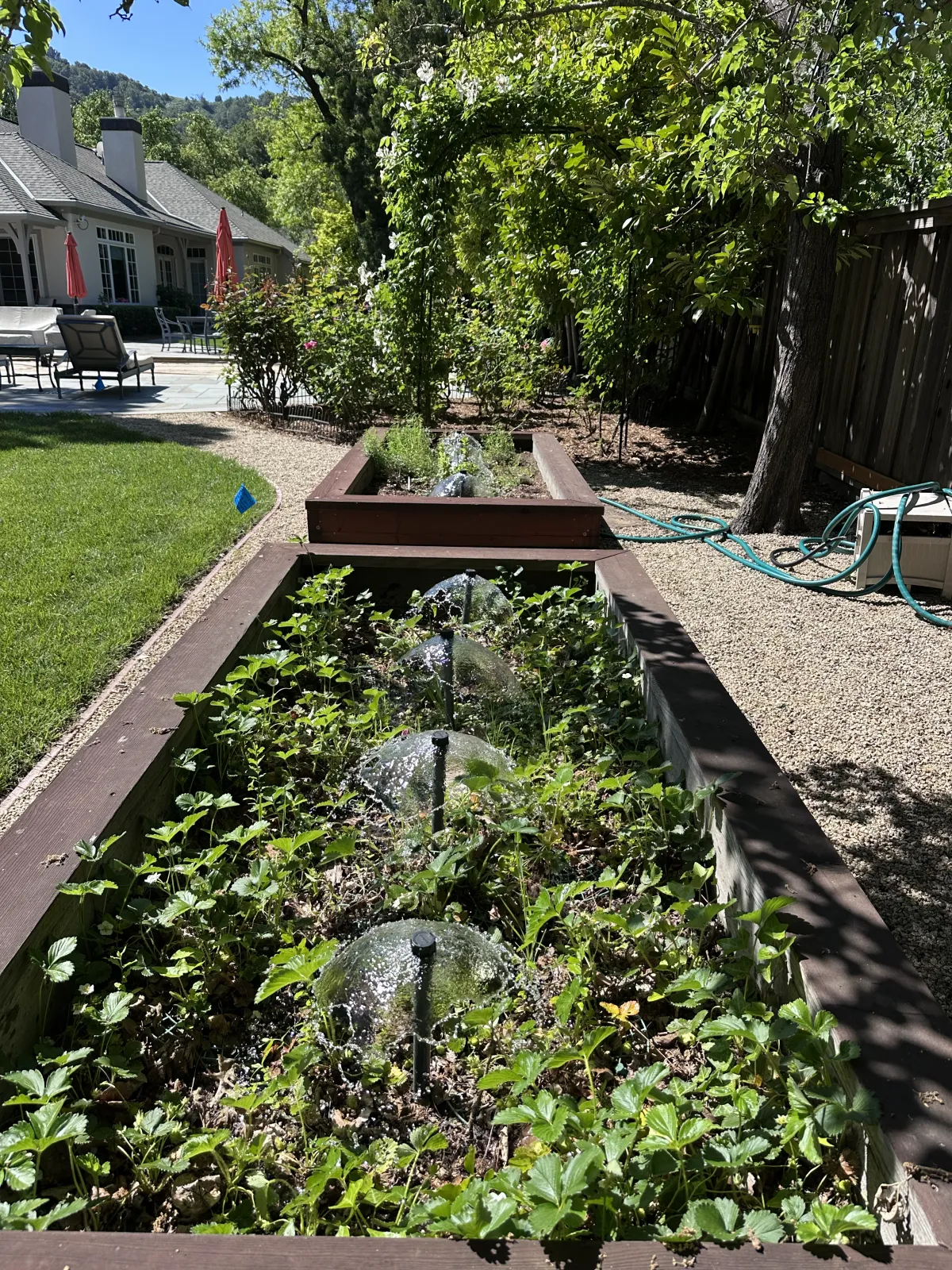
A box should be narrow enough to reach the middle from each side without stepping into the soil. Long boxes work well along a fence or path. Height is a matter of comfort: taller boxes are easier on the back and help with burrowing pests, but they use more soil.
Leave paths between and around boxes wide enough to kneel, and wide enough for a wheelbarrow at least on one side.
Build to Last
Rot-resistant lumber, steel, and masonry all make durable boxes. Ask how corners are fastened and how the sides are braced, because soil pressure pushes outward over time. Hardware cloth on the bottom can keep gophers out, which is worth considering in many East Bay neighborhoods.
Fill With the Right Soil
Raised boxes are only as productive as the soil inside them. Plan for a quality planting mix rather than native clay, and expect it to settle in the first season. Calculate the volume before ordering so the boxes can be filled in one delivery.
Install Drip Irrigation With the Boxes
Hand watering is easy to skip on a hot week. A dedicated drip zone with emitter lines or inline tubing delivers consistent water to the roots and keeps foliage dry. Run the supply line before paths and gravel go in, and include a valve or zone on the controller just for the vegetables, since they need a different schedule than shrubs. Our drip irrigation checklist explains what to watch once it is running.
Make It Part of the Landscape
Surround the boxes with a firm, clean surface such as gravel or decomposed granite, define the area with edging, and consider how it looks from the house. A well-installed vegetable garden should feel like it belongs with the patio and planting around it.
Custom vegetable boxes are a specialty of Jean Fogg Landscape's landscape installation services. Request a free estimate to plan boxes, irrigation, and paths that fit your yard.