
Dry shrubs or soggy planting beds? Learn how to check drip emitters, leaks, watering zones, and soil moisture before increasing irrigation.
If one shrub is drying out while the rest of a planting bed looks healthy, check the irrigation delivery before adding more watering time. A controller can run on schedule even when a disconnected line or blocked emitter keeps water from reaching a plant.
In a Walnut Creek or Concord yard, summer stress can make that uneven performance especially noticeable. A useful irrigation check separates three questions: is water arriving, is it reaching the roots, and does the schedule fit the planting?
Run the Zone While You Watch
Turn on the affected zone manually and follow the tubing through the bed. Start near the valve, then check the middle and far end. Look for disconnected fittings, split tubing, water bubbling from one spot, and emitters with little or no output. Move loose mulch aside gently so you can see the connections.
Write down where the problem occurs. One dry plant suggests a local delivery issue; weak flow across a whole zone calls for a broader inspection of the supply, filter, pressure regulation, or valve. Repairing the visible symptom without checking the rest of the zone can leave the underlying problem in place.
Check the Soil Before Changing the Timer
Dry-looking mulch does not tell you whether the soil beneath it is wet. Carefully check soil moisture near the affected plant and compare it with a healthy plant in the same bed. Avoid damaging roots. Note whether the soil is dry, moist, or persistently saturated.
Both excess and insufficient moisture can harm roots. UC IPM's guide to irrigating trees and shrubs explains why watering frequency depends on the soil, plant, weather, and system. There is no reliable universal answer to how many minutes every drip zone should run.
Make Sure Emitters Still Fit the Garden
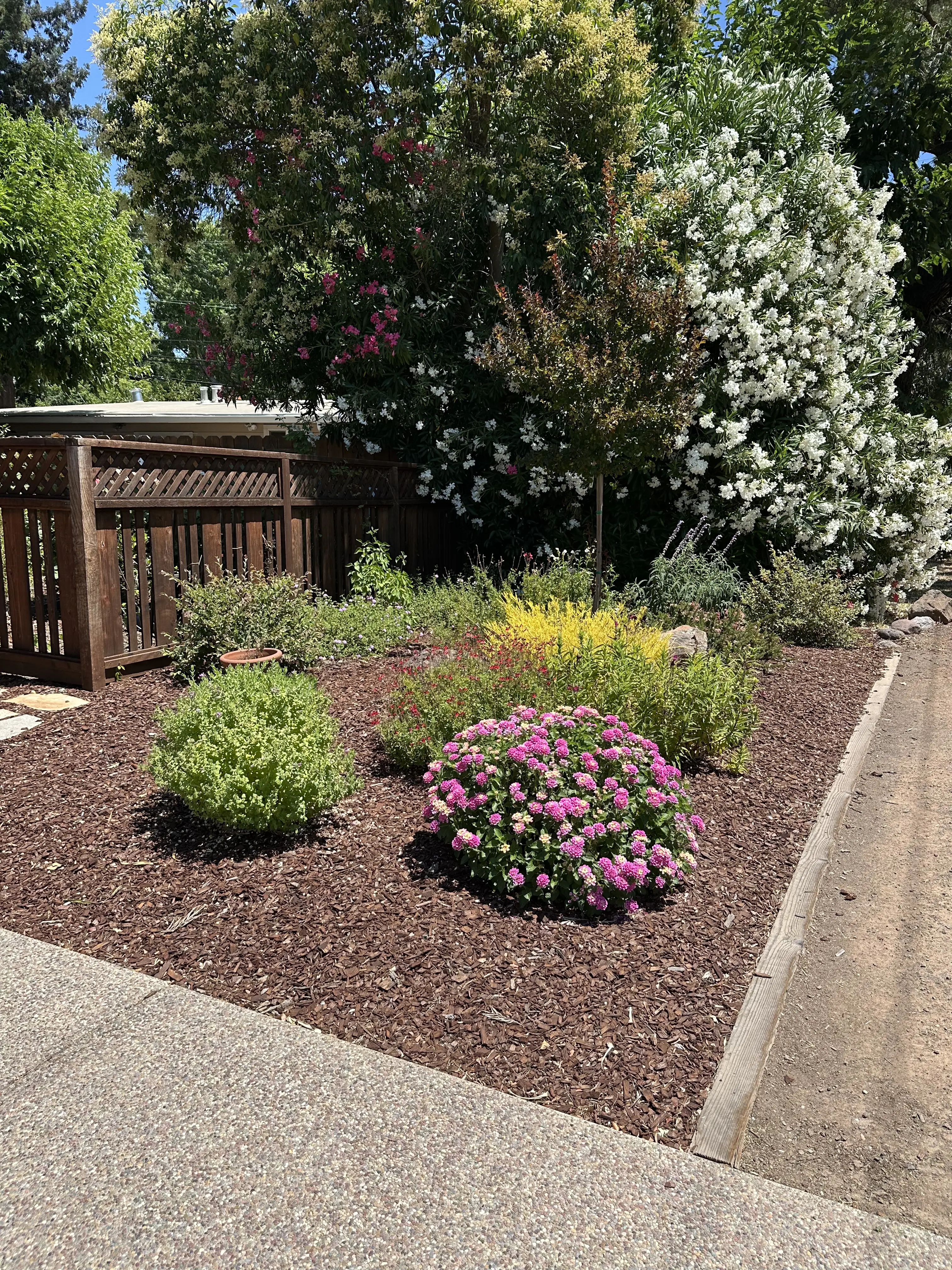
An emitter layout that worked at installation may need adjustment as shrubs grow. Established plants need water distributed through their root area rather than concentrated against the trunk. Newly planted replacements may need separate attention while they establish.
Review plant groupings, too. A thirsty seasonal planting and established low-water shrubs can be difficult to manage on one schedule. Our guide to irrigation and drainage upgrades explains how those decisions fit into a larger landscape plan.
Record the Fix and Recheck It
After a repair, run the zone again and confirm that water reaches the intended locations. Record any controller changes and observe the soil and plants over the following days. Changing several settings at once makes it harder to know what helped.
Keep a simple note of the zone number, affected plants, and visible symptoms for your next maintenance visit. Photos of a leak while the system is running are more useful than a description after the water has dried.
If dry patches or soggy beds keep returning, request a free on-site estimate from Jean Fogg Landscape. An irrigation review can help identify whether the yard needs a targeted repair, a revised layout, or a broader landscape maintenance plan.