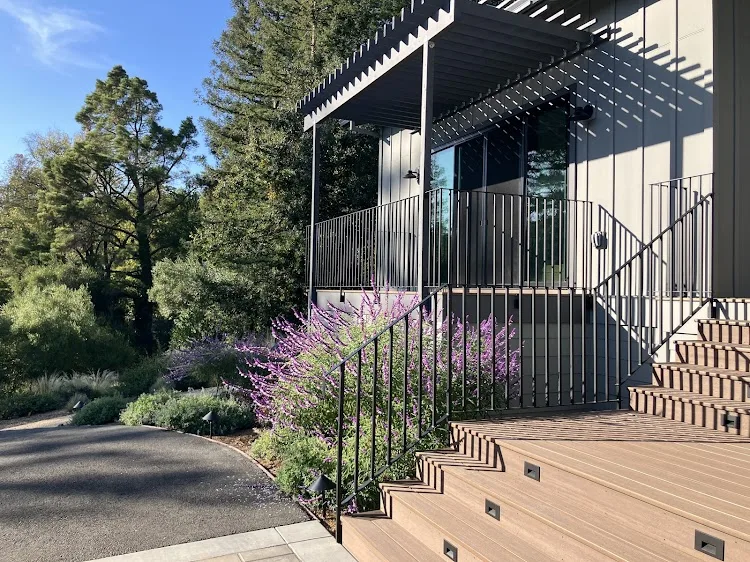


Plan a backyard patio installation that fits your furniture, drains away from the house, and connects to the garden in Walnut Creek and Danville.
A new patio is often the reason a Walnut Creek or Danville backyard finally gets used. It is also one of the harder parts of a landscape to change once it is built. Getting the size, base, and drainage right at installation saves the cost of tearing out pavers later.
Size the Patio Around Real Furniture
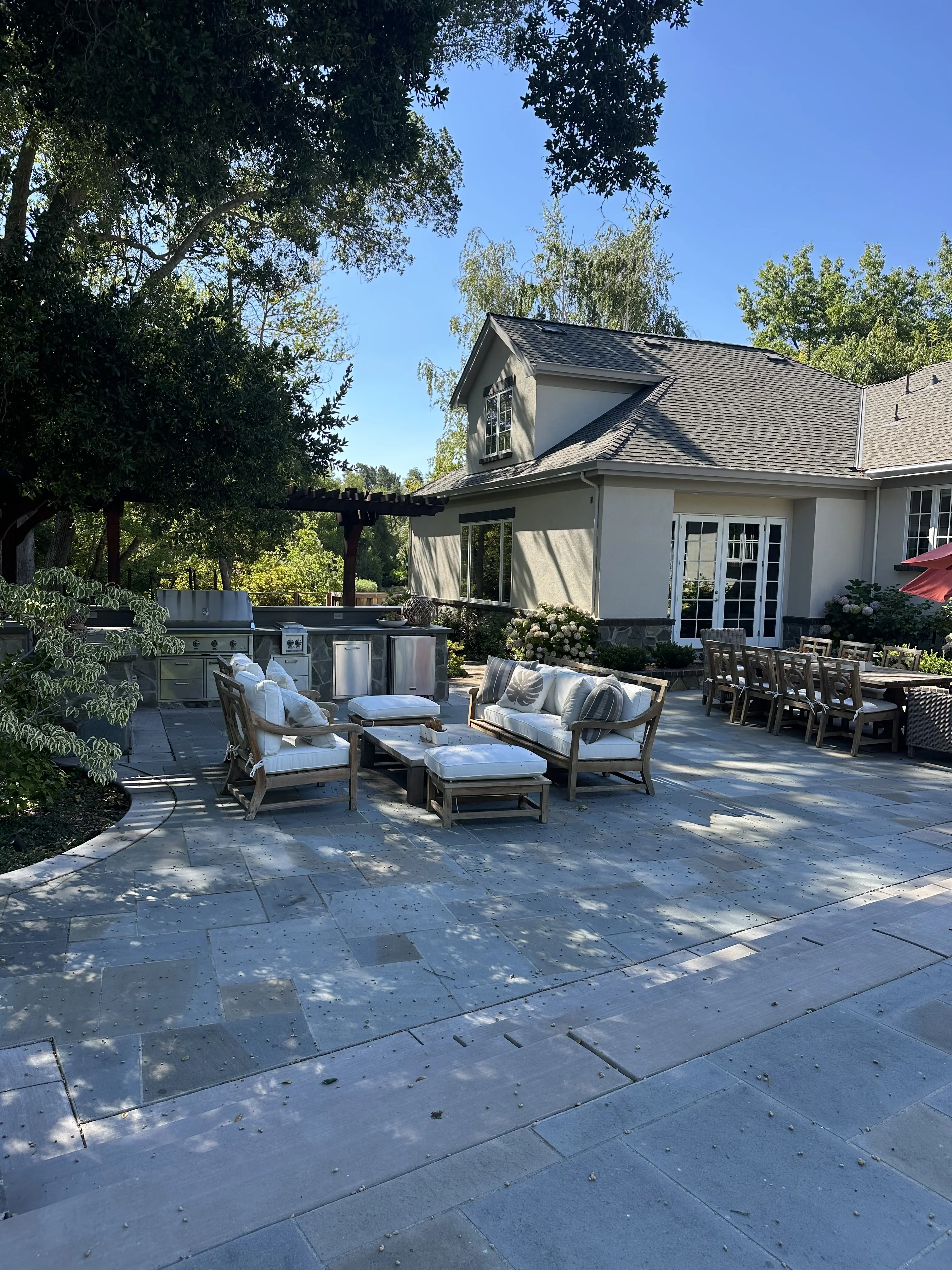
Measure the table, chairs, and lounge furniture you plan to use, then add room to pull chairs out and walk behind them. A patio that looks generous on paper can feel cramped once a dining set and a grill share it.
If the space has several uses, consider separate areas: a dining patio near the kitchen door and a smaller seating area farther into the garden. Two well-sized spaces connected by a path often work better than one large slab.
Decide on Material Early
Concrete pavers, natural flagstone, and poured concrete each have a different look, cost, and installation method. Pavers allow individual units to be replaced. Flagstone gives a natural, irregular surface. Poured concrete can be colored or finished in several ways.
Choose based on how the patio will be used, how it relates to the house, and how much shade it gets. Light-colored surfaces stay cooler in full sun, which matters on a south- or west-facing patio in an inland valley.
Build the Base for the Soil You Have
Most patio failures start below the surface. Excavation depth, base material, compaction, and edge restraint should match the soil and the expected load. Clay soils common in parts of Contra Costa County hold water and move with moisture, so preparation matters.
Ask how the base will be built and compacted. A clear answer here is one of the most useful ways to compare landscape estimates.
Slope It Away From the House
A patio should shed water away from the foundation and toward a place that can accept it, such as a planting bed, a drain, or a dry creek. Even a small, consistent slope keeps puddles from forming and protects the house.
Check where downspouts discharge and whether that water will cross the new patio. It is much easier to add a drain line before pavers go down than after.
Connect the Patio to the Garden
Planting along the edges softens hardscape and gives the patio a sense of enclosure. Leave room for plants to reach mature size without spilling onto the walking surface, and plan irrigation lines before the patio edge is set so you are not trenching through finished work.
Jean Fogg Landscape installs patios, paths, and stone work as part of complete landscape installations in Walnut Creek, Danville, and across Contra Costa County. Request a free estimate to plan a patio that fits how you want to use the yard.