
Plan a lawn replacement with useful paths, low-water planting, irrigation changes, and room for existing trees in your Contra Costa County yard.
A successful lawn replacement starts with a plan for the space after the grass is gone. For Contra Costa County homeowners, that may mean a welcoming front entry, a place to sit, or planting beds that need less routine mowing. Removing turf is only one part of the project.
Before choosing plants or demolition dates, decide which parts of the lawn serve a purpose and which are mostly being watered and mowed out of habit.
Keep the Space You Actually Use
Walk the yard as you use it on an ordinary day. Where do children play? How do visitors reach the front door? Where do you carry bins or move a garden cart? Mark those routes before drawing planting beds.
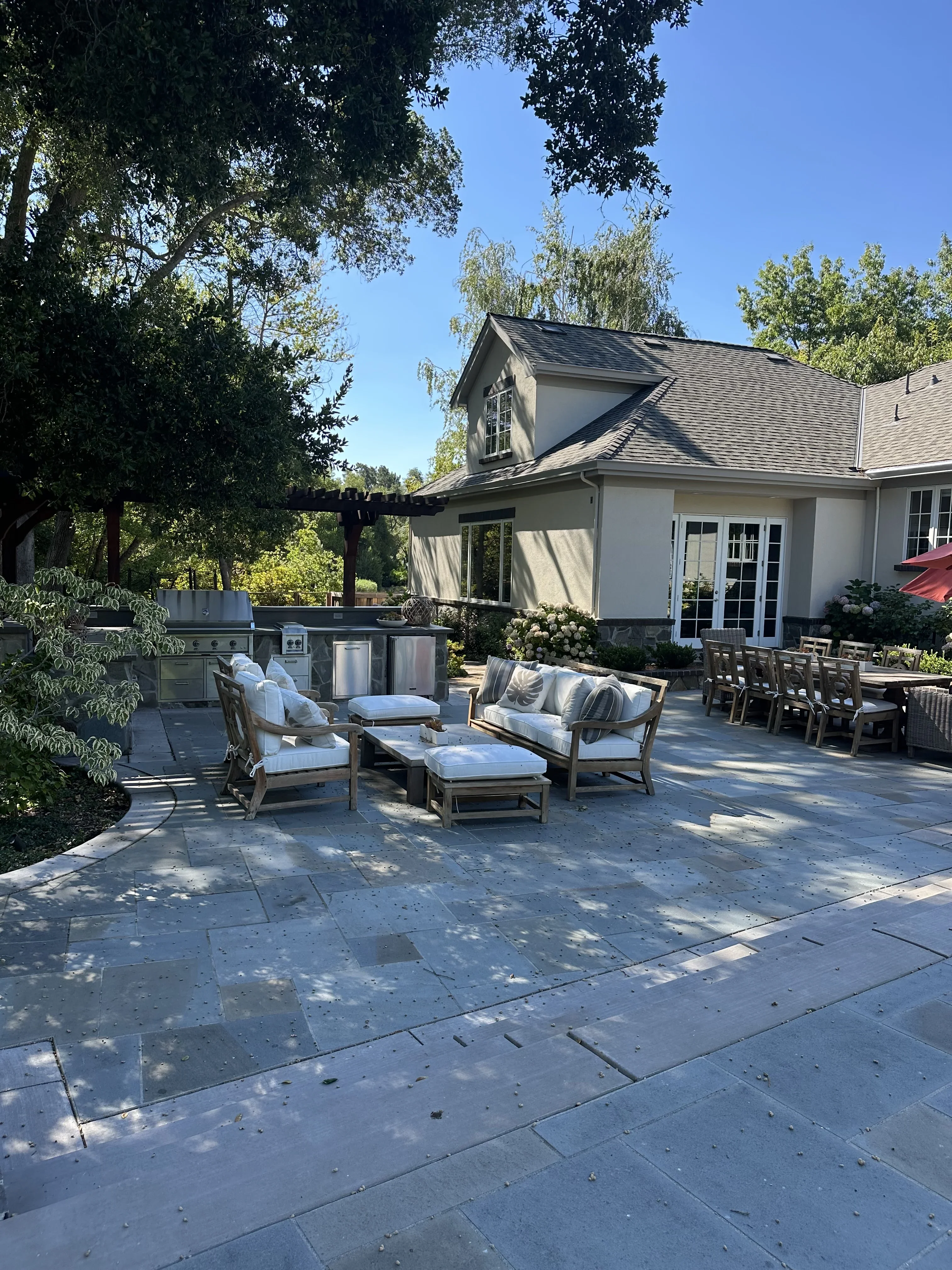
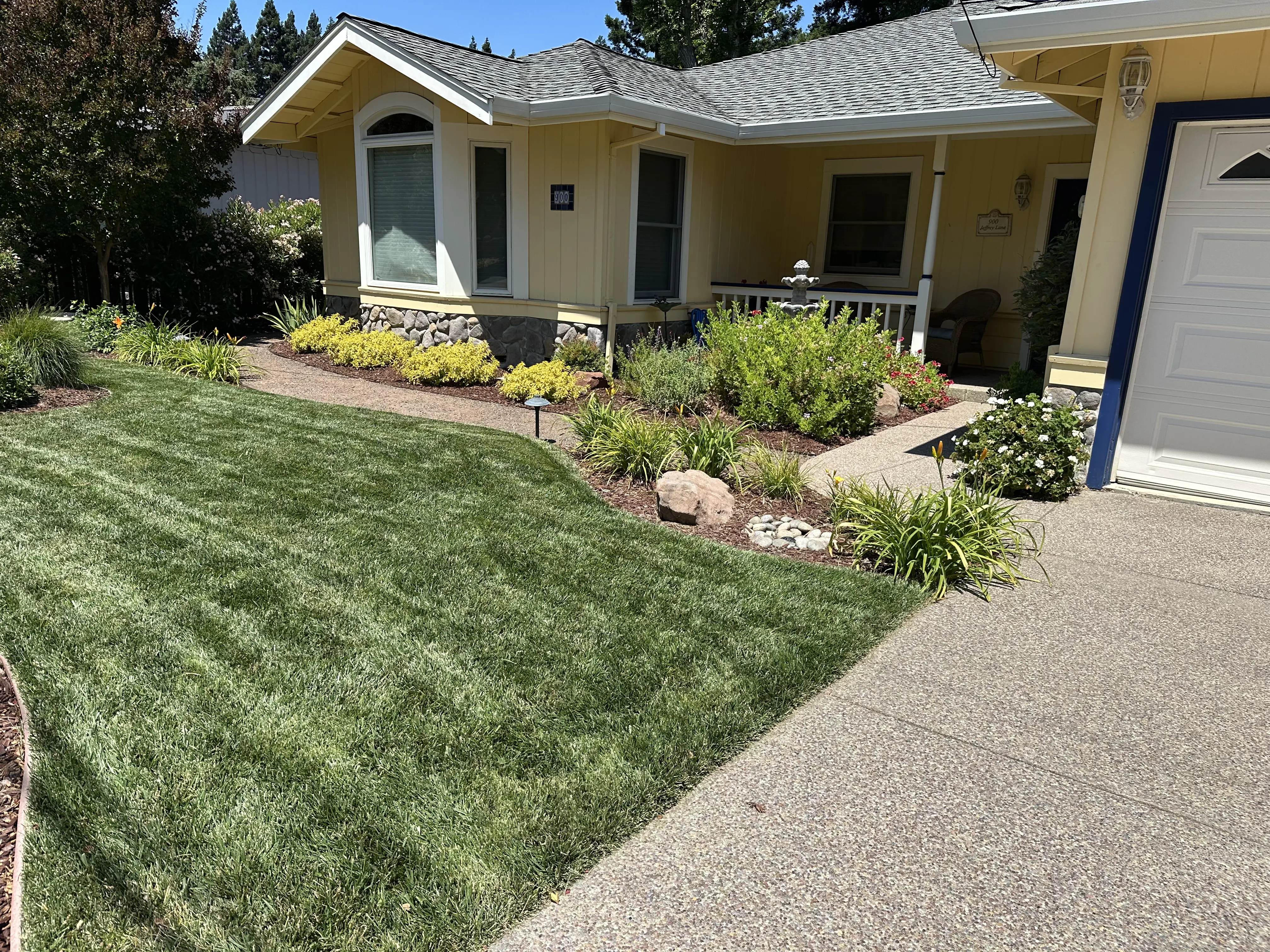
Some properties benefit from keeping a smaller, practical lawn and converting the surrounding strips. Others work better with a path, a sitting area, and layered planting. A narrow lawn beside a driveway has different requirements from an open backyard used for games.
Decide How the Grass Will Be Removed
Physical removal and sheet mulching are different approaches, with different implications for timing and finished soil levels. Sheet mulching covers grass with overlapping material such as cardboard and a mulch layer; it is not the right shortcut for every weed problem or site.
Identify the existing grass and persistent weeds before choosing a method. Also check whether added material would raise the bed above a path or bury the base of existing plants. The Contra Costa Master Gardeners' lawn conversion guidance is a useful starting point for comparing options.
Redesign Irrigation Along With the Planting
Do not assume the lawn sprinklers are a finished watering system for the replacement garden. Review which zones can be converted, which lines are no longer needed, and how water will reach individual planting groups.
If mature trees shared the lawn's irrigation, include their ongoing water needs in the plan before switching that zone off. New low-water plants also need establishment care. Our drought-smart planting guide covers how plant selection, grouping, and irrigation work together.
Give the New Garden Structure
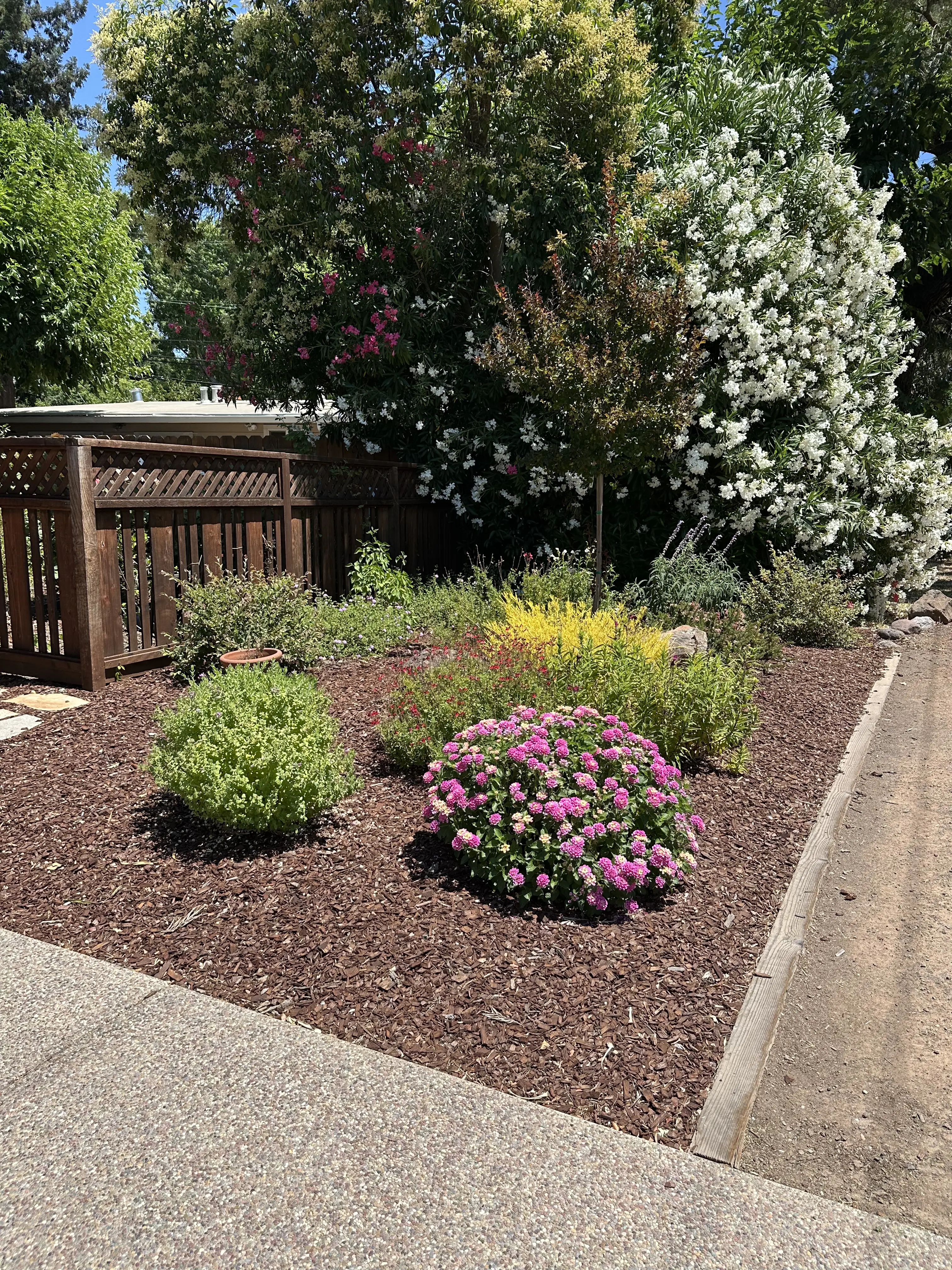
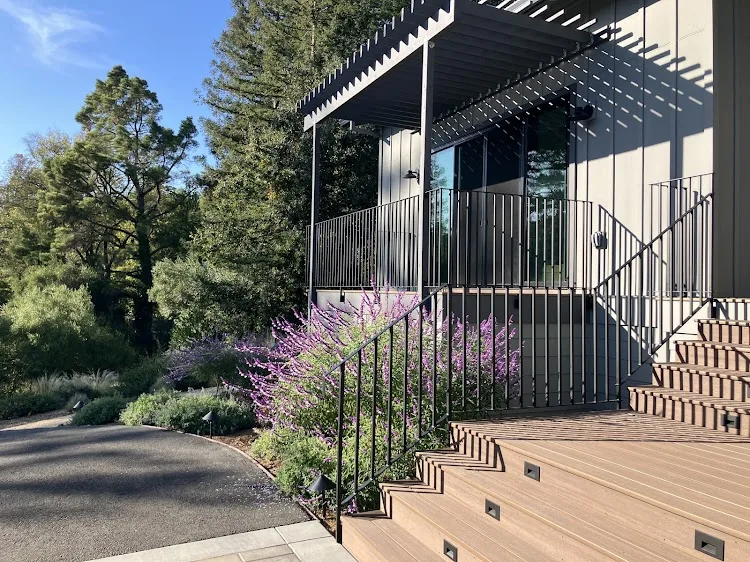
A clear path and well-defined bed edges help a converted front yard look intentional while young plants fill in. Use mature plant dimensions to set spacing and keep walkways open. A few repeated plant groupings can be easier to read from the street than dozens of unrelated specimens.
For a small Lafayette front yard, start with the entry route and views from the house. For a larger exposed yard, consider where shade and a place to pause would make the space more useful. Choose the layout before buying plants.
Bring These Questions to the Estimate
Ask what the proposed work includes: removal and disposal, soil preparation, irrigation conversion, edging, plants, mulch, and establishment visits. If you plan to seek a water-provider rebate, confirm current eligibility and any preapproval requirements directly with your provider before starting work.
Jean Fogg Landscape can discuss lawn replacement as part of a landscape installation. Request a free estimate to review the existing lawn, the work needed underneath it, and a planting plan that fits how you want to use the yard.