
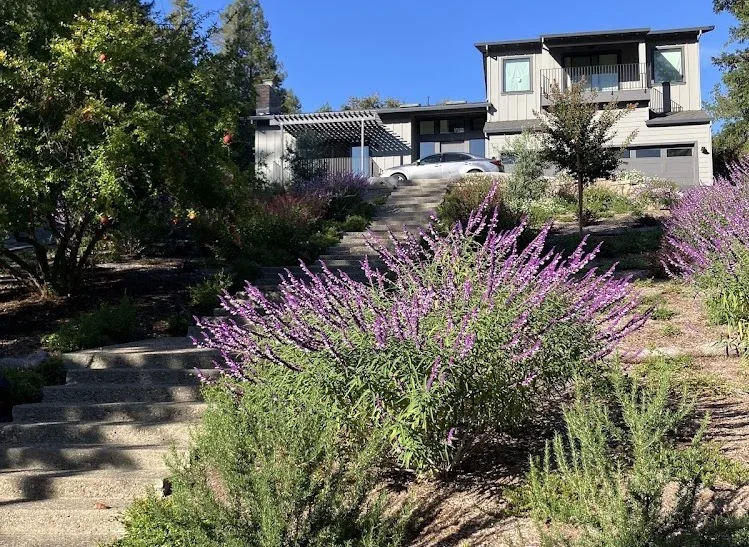
Plan a sloped front yard installation around safe steps, drainage, soil stability, and planting that holds the hill in Lafayette and Orinda.
A sloped front yard can be the most memorable part of a Lafayette or Orinda home, or the part nobody wants to walk across. The difference usually comes down to decisions made before any planting: how people get from the street to the door, where water goes during a storm, and what holds the soil in place while new plants establish.
Treat a hillside installation as a construction project first and a planting project second.
Start With the Route to the Door
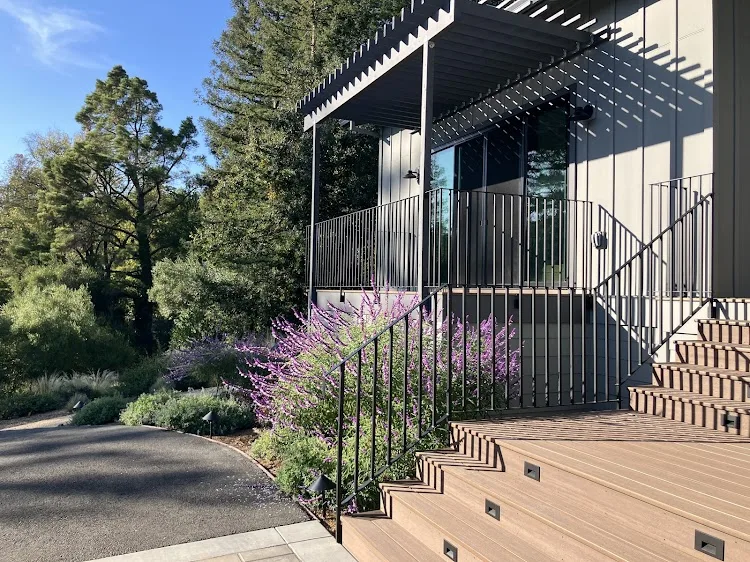
Walk the existing route from the driveway and the sidewalk. Note where the grade feels steep, where people cut across planting, and where a handrail would help. A comfortable entry often means breaking the climb into shorter runs with landings rather than one long stair.
Decide on the route before choosing plants. Steps, landings, and path widths set the shape of every bed around them, and moving them later disturbs finished work.
Read the Water Before Grading
Watch the slope during or just after rain if you can. Look for gullies, mulch that has washed onto the driveway, and wet spots at the bottom of the hill. These show where water concentrates and where the installation needs to slow it down or redirect it.
Grading, swales, and drainage lines should be settled before planting starts. Our guide to irrigation and drainage upgrades covers how these systems work together. Walls that hold back a significant amount of soil may need engineering or a permit, so confirm requirements with your city early.
Choose Plants That Hold the Hill
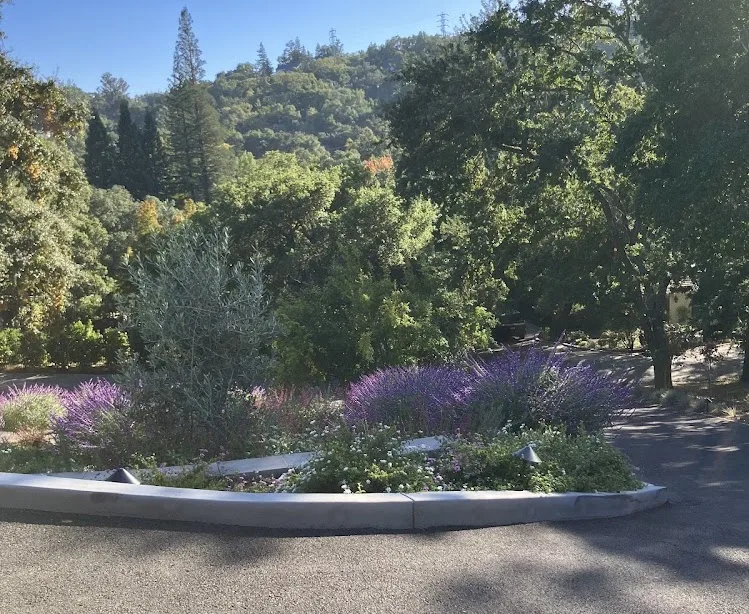
Deep-rooted shrubs, perennials, and groundcovers help stabilize soil once they establish. Group them by water needs so a single drip zone can serve each area well. On a sunny slope, low-water plants such as salvias, grasses, and native shrubs can give strong color without a lawn's irrigation demand.
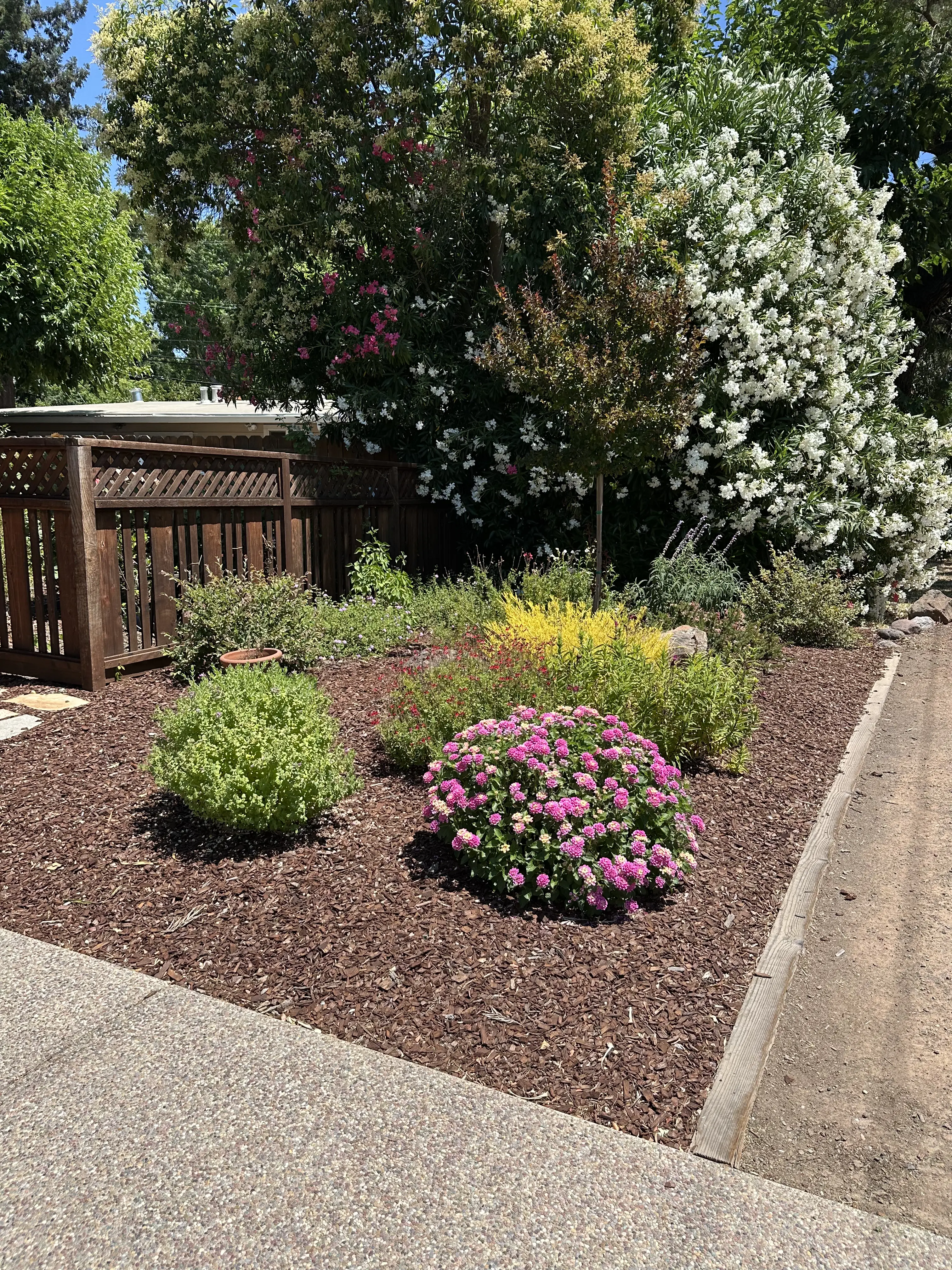
Plant spacing matters more on a slope. Bare soil between young plants is vulnerable to erosion during the first rainy season, so plan for mulch, erosion-control fabric where appropriate, or a groundcover that fills in quickly.
Install Irrigation for the Slope
Spray heads on a hillside often run water down the surface instead of into it. Drip irrigation with emitters placed at each plant usually performs better, especially when run times are split into shorter cycles so water can soak in. The top of a slope also dries faster than the bottom, which may justify separate zones.
See our notes on drought-smart planting for grouping plants by water use.
Plan the First Year
Hillside plantings need close watching through their first summer and first rainy season. Check for washouts after storms, confirm that emitters are delivering water, and replace mulch that moves downhill.
Jean Fogg Landscape designs and builds hillside and front yard installations throughout Lafayette, Orinda, and the rest of Contra Costa County. Request a free estimate to walk the slope and talk through steps, drainage, and planting.